



Let us start with something most teams recognise but rarely pause to examine properly. Work is happening, people are active, tools are in place, and yet progress often feels slower than expected, decisions take longer, and simple tasks require more coordination than they should.
This is usually explained as workload, communication gaps, or team inefficiency. In reality, the issue often sits deeper in how work is structured across systems. When workflows are scattered, the cost is not always obvious at first, but it compounds quickly across time, effort, and decision-making.
Where the Problem Actually Begins
In many organisations, work is distributed across multiple tools that were adopted at different points for different needs. Hiring is managed in one system, project execution in another, communication happens across chat platforms, performance is tracked elsewhere, and administrative tasks sit in separate tools. Each system works independently, but they do not form a single, connected view of work.
This creates fragmentation. Information exists, but it is spread out. Updates happen, but they are not centralised. Progress is made, but it is not always visible in one place.
At this stage, nothing appears broken. The systems are functioning, and teams continue to deliver. The cost begins to appear in how much effort is required to keep everything moving.
The Hidden Cost of Coordination
When workflows are scattered, coordination becomes a continuous task. Teams spend time switching between tools, checking multiple sources for updates, and following up to confirm what is already in motion. A significant part of the workday is spent gathering information rather than acting on it.
Managers often rely on messages, meetings, and manual updates to understand progress. Team members repeat information across platforms to keep everyone aligned. Decisions are delayed because the full picture is not immediately available.
This is not inefficiency from people, it is inefficiency from structure. The system requires extra effort to produce clarity.
The Visibility Gap
One of the most significant costs of scattered workflows is the lack of real-time visibility. Work is happening, but it is difficult to see clearly. Progress updates depend on manual reporting. Delays are noticed later than they should be. Risks build quietly because there is no single view of what is moving and what is not.
Without visibility, teams operate reactively. Issues are addressed after they affect timelines rather than when they first appear. Opportunities to improve performance are missed because there is no consistent way to track execution as it happens.
The Impact on Decision-Making
Decision-making depends on clarity. When information is fragmented, decisions require more time because data has to be gathered, verified, and interpreted across different systems. This slows down execution at every level.
Leaders may have partial visibility into different areas of the business but lack a unified view that connects them. As a result, decisions are made with incomplete context or delayed until enough information is collected. Both outcomes affect speed and confidence.
The Compounding Effect on Teams
Over time, scattered workflows create operational fatigue. Teams feel busy because there is always something to check, update, or follow up on. Communication increases, but it does not always improve clarity. Effort increases, but output does not scale at the same rate.
Ownership can become unclear when tasks and responsibilities are spread across different systems. Accountability weakens because it is harder to trace who is responsible for what at any given moment. This is where small inefficiencies begin to affect overall performance.

Why Adding More Tools Makes It Worse
A common response to workflow challenges is to introduce new tools that promise better tracking, communication, or reporting. While each tool may solve a specific problem, it often adds another layer to an already fragmented system.
The number of tools increases, but the connection between them does not. Instead of simplifying work, the system becomes more complex, requiring even more coordination to manage effectively.
The issue is not the tools themselves, but how they exist in isolation.
What Changes When Work Is Structured
When workflows are structured within a connected system, the cost of coordination reduces immediately. Information becomes easier to access because it exists in one place. Progress becomes visible because updates are tied directly to tasks and outcomes. Ownership becomes clear because responsibilities are defined within a shared system.
Teams no longer need to ask for updates constantly because they can see what is happening. Managers spend less time gathering information and more time making decisions. Issues can be identified early because execution is visible in real time.
Where SpurtX! Fits In
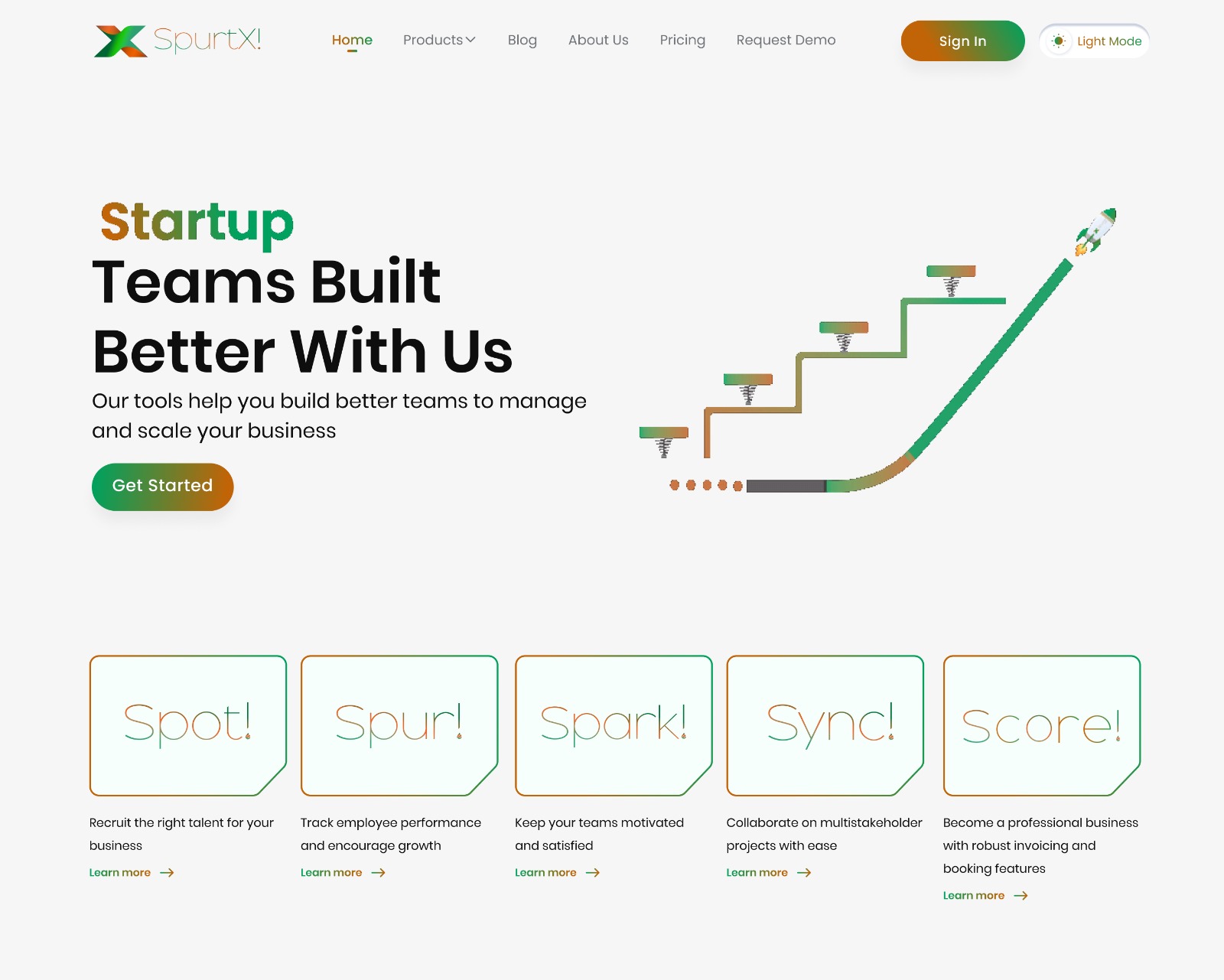
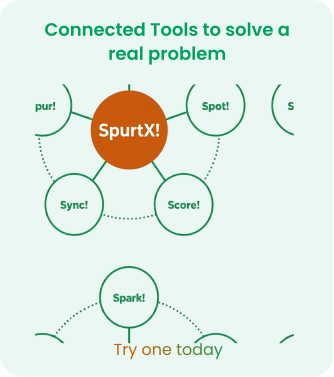
SpurtX! addresses the core problem of scattered workflows by providing a unified system where different aspects of work are connected. Instead of managing hiring, projects, performance, and communication in separate tools, these functions exist within one structured environment.
This connection allows data to flow across processes. Hiring decisions link to performance tracking. Project progress connects to measurable outcomes. Communication stays tied to actual work instead of being separated from it.
The result is not just organisation, but clarity. Work becomes easier to follow, manage, and improve because it is no longer fragmented.
Conclusion
The real cost of scattered workflows is not just time lost or extra effort. It is the reduction in clarity, speed, and confidence that affects how teams operate every day.
As organisations grow, the complexity of work increases. Without structure, that complexity turns into friction. With the right system, it becomes manageable and even predictable.
SpurtX! provides the structure that helps teams move from scattered activity to connected execution, making work more visible, decisions faster, and outcomes easier to achieve.
Next Step
If work currently feels heavier than it should and too much time is spent coordinating instead of executing, it may be time to look at how workflows are structured.
Explore how SpurtX! can bring clarity and connection to your operations: https://spurtx.tools