



Ask most teams how their organisation handles customer data, and you will get a reasonable answer. Ask them to show you the audit trail, and the conversation changes quickly.
That gap between what teams believe they are doing and what they can actually demonstrate is the real compliance problem facing Ghanaian businesses right now. And it is not a technology gap. It is an operational one.
Cybersecurity compliance has become a systems problem. Not just an IT problem. Not just a legal one. Businesses that understand this distinction early will be far better positioned when regulators come calling. Those that do not will face consequences that go well beyond a fine.
The Regulatory Environment Has Shifted Considerably
Ghana's Cyber Security Authority, established under the Cybersecurity Act, 2020 (Act 1038), has expanded well beyond its original scope. What began as a framework for registering and monitoring Critical Information Infrastructure; banking, telecoms, energy, healthcare, transport now extends to artificial intelligence, cloud computing, and the Internet of Things.
On top of that, the Ghana Data Protection Bill, 2025 is set to repeal and replace the Data Protection Act, 2012 (Act 843), and it raises the bar considerably. Businesses must now appoint a certified Data Protection Officer. They must meet stricter consent requirements and comply with data localisation rules. Penalties for non-compliance can reach 100,000 penalty units.
For businesses in finance and digital services especially, this has become a multi-regulator environment that touches every part of the organisation, from how customer data is first collected to how incidents are reported and resolved.
The Numbers Reflect What Is Already Happening
Ghana's digital growth makes the urgency concrete. According to DataReportal's Digital 2025 report, 24.3 million Ghanaians are now online, representing nearly 70 percent internet penetration. More people online means more data being generated, more systems being used, and more exposure.
Between January and June 2025, Ghana recorded 2,008 cyber incidents, a 52 percent rise from the same period in 2024 with financial losses reaching GH¢19 million in the first nine months of 2025. The primary drivers were online fraud, ransomware, and supply chain attacks where criminals gained access not by targeting businesses directly, but through third-party tools those businesses had connected to their systems.
These figures come from the Cyber Security Authority itself. They are not projections. They reflect what is already happening to Ghanaian businesses, in Ghanaian markets.
The Core Problem Is Operational Fragmentation
Here is what the compliance gap actually looks like inside most organisations.
Data flows across too many places at once. Intake forms, WhatsApp threads, spreadsheets, email chains, third-party platforms, each holding a piece of the picture, with no one holding the full view. Consent gets captured somewhere, but tracing it back becomes its own project. Vendors are onboarded without proper risk assessments. Access controls are applied to some systems and quietly skipped on others.
Individually, each of these gaps feels manageable. Together, they create exactly the kind of fragmented operation that regulators are trained to identify.
The commercial consequences compound quickly. Teams spend hours reconciling data across disconnected tools, hours that produce no revenue. Mistakes surface late, when they are expensive to fix. A cyber incident triggers internal chaos rather than a coordinated response. Vendor risks go unexamined until a breach makes them impossible to ignore. Reputational damage, particularly in financial services, takes far longer to recover from than any regulatory fine.
As a business grows, this complexity grows with it. Visibility gets harder to maintain, not easier. The organisations most exposed are often not the smallest or least sophisticated. They are the ones that scaled quickly without building operational structure to match.
Compliance Is Now an Operational Infrastructure Problem
Many organisations still approach cybersecurity and data protection the wrong way, treating them as problems to hand off to IT or legal. A stronger firewall helps. An updated policy document helps. Neither one changes how work actually gets done across the business. That is where the real exposure lives.
Regulators reviewing compliance under Act 1038 or the incoming Data Protection Bill will not be satisfied by descriptions of what an organisation intends to do. They will expect businesses to demonstrate structured processes, controlled access, documented decisions, and coordinated governance across functions.
Describing what you do is no longer sufficient. You need to show it.
Organisations that manage this well tend to share one thing: operational structure that makes compliance a natural output of how work gets done, not a separate exercise that happens before an audit. Processes are defined and consistently followed. Data sits in one place rather than distributed across a dozen tools. Accountability is clear across every function. When something goes wrong, the response is coordinated rather than reactive.
That kind of structure does not emerge from awareness campaigns or policy updates alone. It has to be built into daily operations, deliberately, at the systems level.
Operational Readiness Is the Competitive Advantage
There is a version of this that goes beyond compliance.
Businesses that build genuine operational infrastructure where workflows are structured, data is visible, and accountability is traceable, do not just satisfy regulators. They run faster. They make better decisions. They are less vulnerable to the supply chain attacks that are already the dominant threat vector in Ghana's current incident data.
For enterprise clients, institutional partners, and international funders, operational maturity is increasingly part of the due diligence conversation. A business that can demonstrate structured, auditable operations is not just compliant. It is a more credible partner.
The gap between organisations caught off guard when regulators arrive and those already operating at the required standard is rarely technical sophistication. It comes down to whether the work of the busines every day, across every function happens inside a structure that makes it visible, traceable, and accountable.

Where SpurtX! Fits Into This
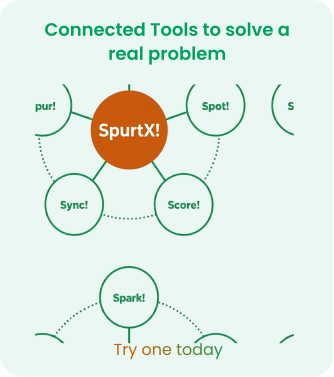
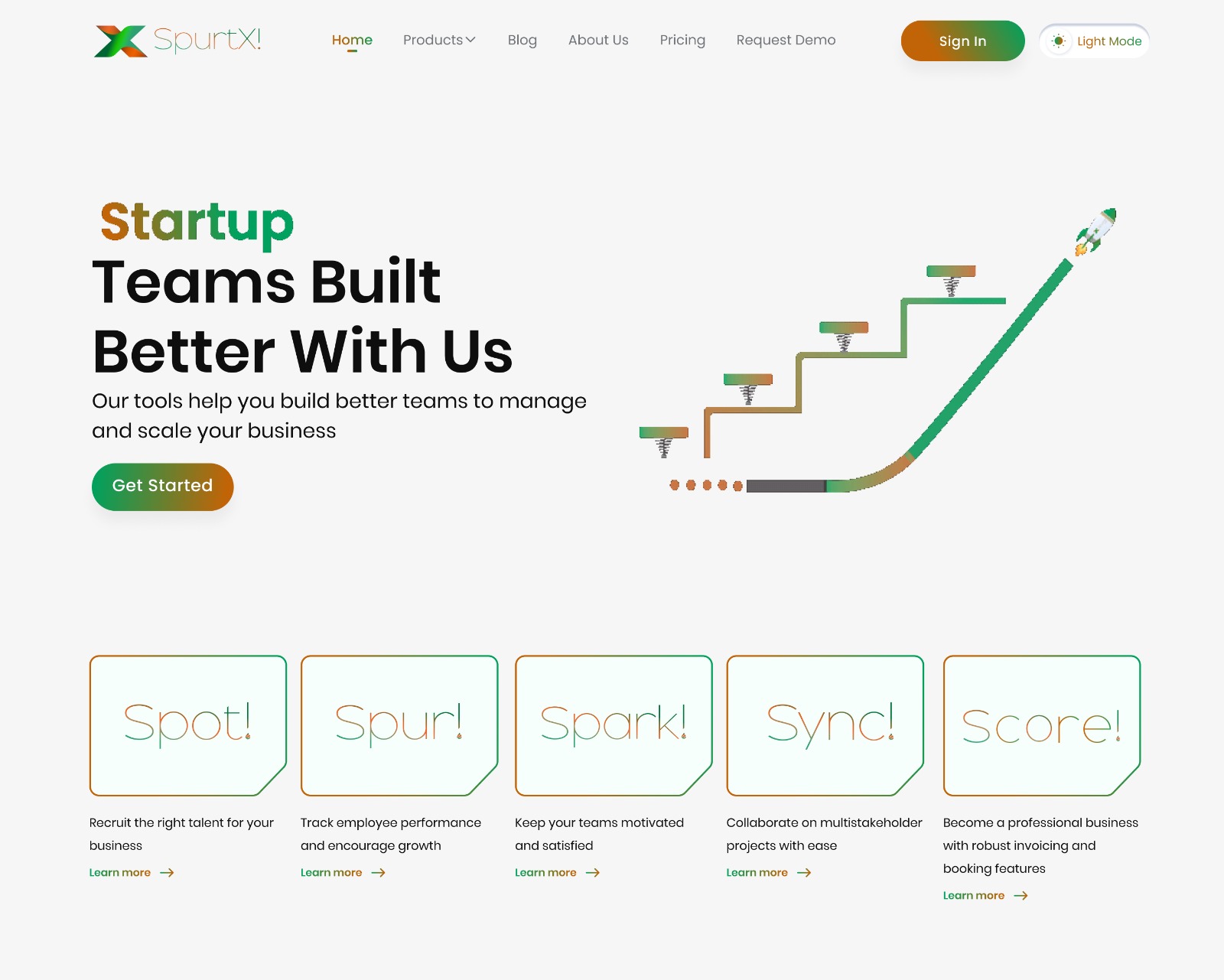
SpurtX! was built for exactly this kind of operational challenge. Not as a compliance tool, but as the operational infrastructure layer that makes structured work and therefore compliance readiness, a natural outcome of how a business runs.
When data, workflows, and accountability live in a connected system rather than scattered across tools, the audit trail exists because the work was done properly. Vendor records are traceable because that is how the system is set up. Incident response is coordinated because processes are already defined. Compliance becomes less of a separate burden and more of a by-product of operational discipline.
That is the practical distinction between organisations that are exposed and those that are not.
Explore how SpurtX! supports structured operations: spurtx.tools
Read the Full Report
For a detailed look at Ghana's regulatory developments, sector-level impact, and a practical framework for assessing your organisation's readiness across governance, compliance, technical security, and operations: